To move customers from delivery apps to direct ordering, you do not switch the apps off. You use them to find new guests, then give every one of those guests a clear reason and an easy way to order from you directly next time: a card in the bag, a direct-only offer, your full menu on your own channel, and a way to stay in touch that you own. Done steadily over a few months, this turns app customers into regulars who no longer cost you commission.
This is a practical plan for owners who are already on the apps and want to rely on them less. It does not argue about whether commission is fair. It assumes you want to keep the apps for discovery and stop paying them for guests who already know you.
Why guests default to the delivery apps
Before you try to move customers from delivery apps to direct ordering, it helps to be honest about why they are there. It is rarely loyalty to the platform.
- Habit. The app is already on their phone, their card is saved, and they know how it works.
- Discovery. They found you on the app in the first place, and they have no other way of thinking about you.
- Trust. They know the app will refund them if something goes wrong. They do not yet know that you will.
- Friction. Your own ordering, if it exists, is a page they have never seen that asks them to create an account.
Every step below addresses one of these. If your direct channel is harder to use than the app, no offer will fix it. Make ordering from you at least as easy as ordering from the app before you spend money promoting it.
Make the direct channel easy first
A guest should be able to order from you directly in fewer steps than on the app. If you skip this step, any effort to move customers from delivery apps to direct ordering will leak away at checkout. Check yours honestly on a phone, on mobile data, as a stranger would.
- No forced account. Let guests order as a guest. Ask for details they need to give (name, phone, address), and offer an account afterwards.
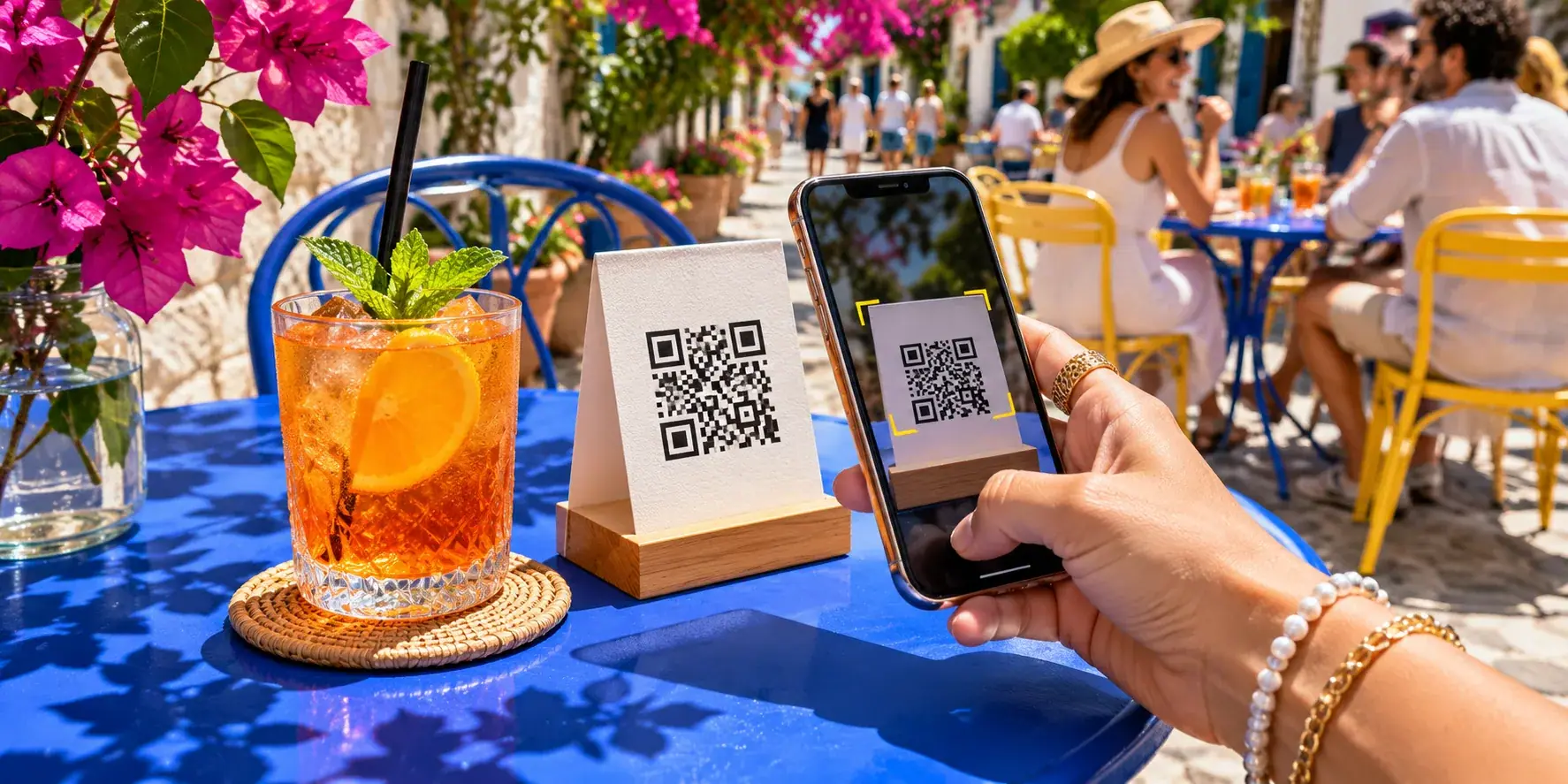
- One obvious link. One short web address and one QR code, used everywhere, not three different systems.
- Clear pickup and delivery options. If you do not deliver yourself, say so plainly and make collection fast.
- Payment that works. Card and wallet payments without surprises at the last step.
- The full menu, with photos and allergens. This matters later, because it is one of your best reasons for guests to come to you.
If you are still choosing tools, our breakdown of restaurant POS system cost covers the questions to ask about fees and data before you commit to any platform.
Bag-drop cards and direct-only offers
The bag is the one moment you have the app customer's full attention, in their own home, with your food in front of them. It is the cheapest place to start when you want to move customers from delivery apps to direct ordering.
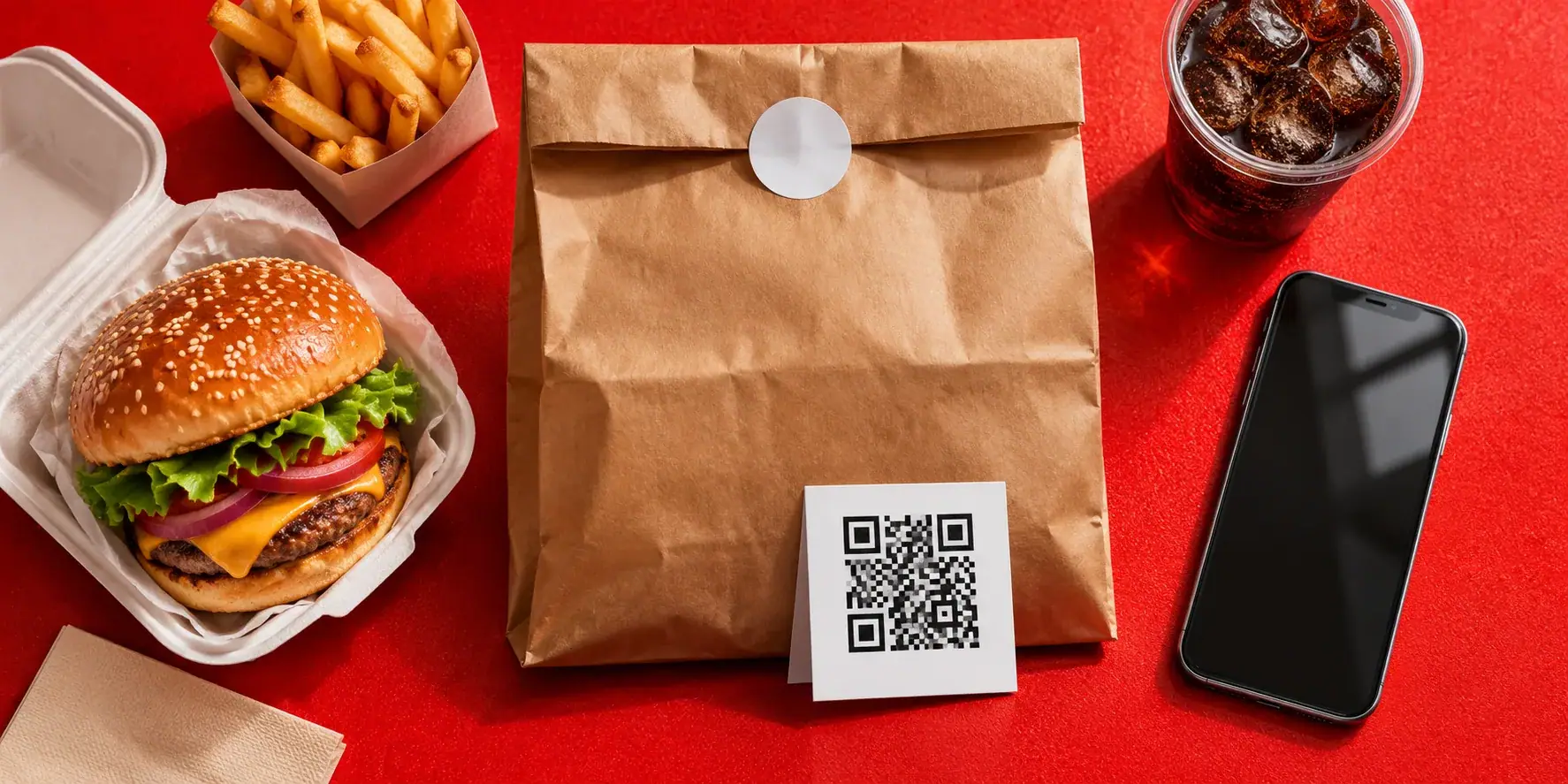
The bag insert QR code
A small printed card in every app order is the most direct way to convert third-party customers to direct orders. It should:
- Thank them in your own voice. This is the first time the guest hears from you rather than the app.
- Give one reason to order direct: a direct-only dish, a first-order offer, or simply that it helps a local business.
- Carry one QR code that opens your ordering page, with the offer already applied if your system allows it.
- Be specific to the channel if you can. A different code or offer per app lets you see which platform's guests are converting.
Read each platform's terms first. Some apps have rules about what goes in the bag or how you may contact their customers, and breaching them is not worth the risk.
Direct-only offers that pay for themselves
A direct-only offer gives a guest a reason to try your channel once. After that, ease and good food keep them.
| Offer type | Why it works | Watch out for |
|---|---|---|
| First direct order discount | Simple, easy to understand | Guests who only ever order with a discount |
| A dish only on your own menu | Gives a lasting reason, not a one-off | Keep it genuinely good, or it backfires |
| Free side or drink on direct orders | Feels generous, costs little | Make sure it fits in the kitchen flow |
| Loyalty that only counts direct orders | Rewards repeat behaviour | Keep the scheme simple enough to explain on a card |
The test for any offer is plain arithmetic: compare what the offer costs you on an order with the commission you would have paid the app on the same order. If the offer costs less, it pays for itself every time a guest moves.
A smaller app menu, the full menu direct
One of the quieter ways to get more direct orders, and to move customers from delivery apps to direct ordering without a discount, is to stop offering everything everywhere.
Keep a focused menu on the apps: your best sellers, the dishes that travel well, at prices that account for the commission. Put the full menu on your own channel, including the specials, the larger sharing dishes, the family bundles and the items that only make sense if you are not losing a share of the order.
This does three things:
- Guests who love you discover there is more to order directly.
- Your app listings stay simple and fast for new customers who are just browsing.
- The dishes with the thinnest margins are no longer the ones carrying commission.
Many venues also price app items a little higher than direct to reflect the commission. Check the platform's terms on price parity before doing this, as some agreements limit it.
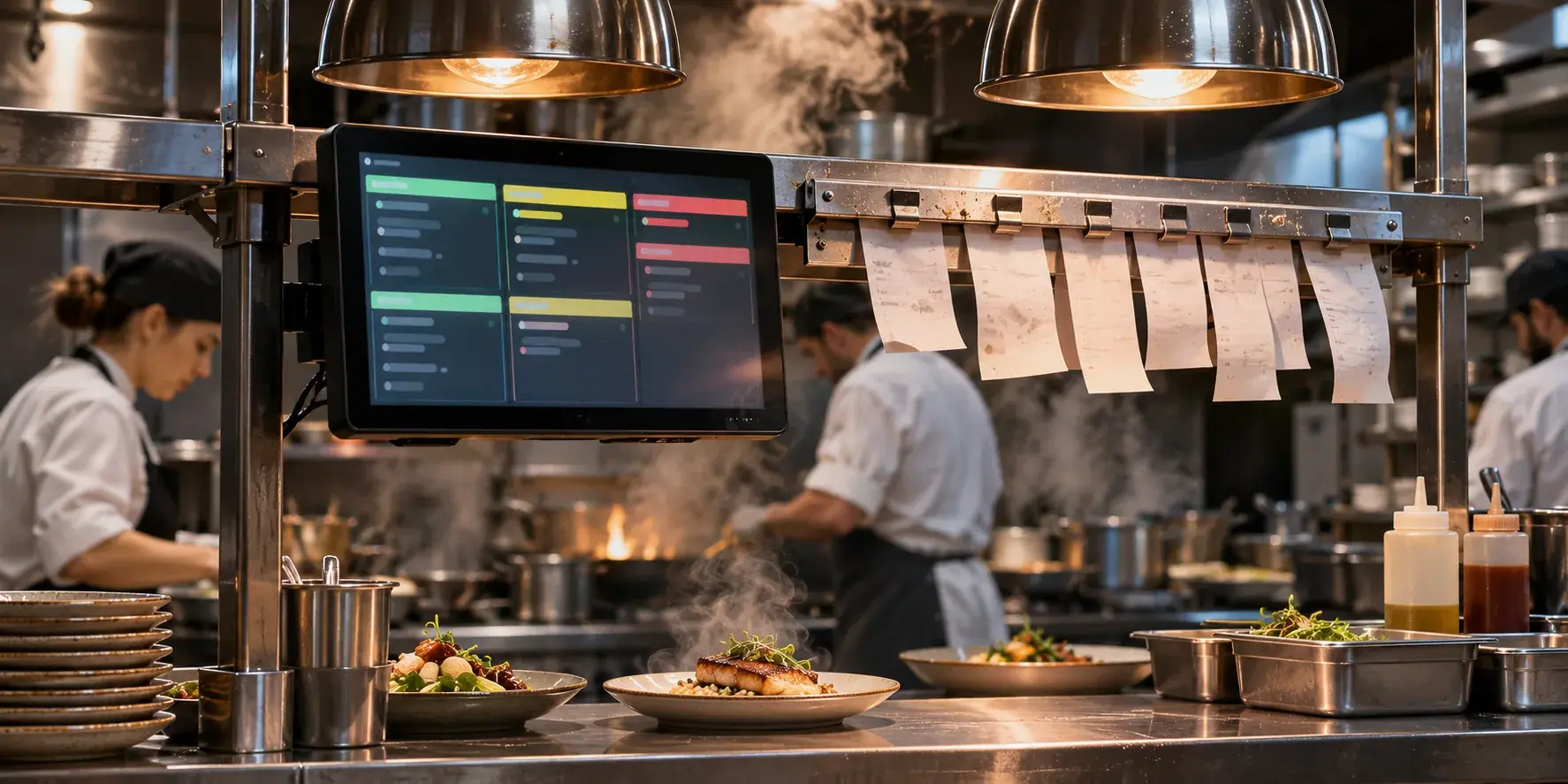
Whatever you decide, keep the two menus in step with the kitchen. A dish that is sold out on one channel and still on sale on another is a refund and a bad review. A kitchen screen that shows every order in one queue, regardless of source, makes this far easier; we compare the options in kitchen display system vs printed tickets.
Owning the phone number: WhatsApp, email and your own list
The apps keep the customer relationship. Once you move customers from delivery apps to direct ordering, keeping them depends on reaching them again. To win back delivery app customers for good, you need a way to reach them that you own.
When a guest orders directly, ask, clearly and with a tick box they choose, whether they would like to hear from you. Then use the channel they prefer:
- WhatsApp or SMS for short, timely messages: tonight's special, a new dish, a quiet-night offer.
- Email for less frequent, richer updates: a new menu, an event, a seasonal change.
- Your own phone line for regulars who like to call. Make sure phone orders go straight into the same system as everything else.
Two rules keep this working. Get consent properly, because marketing messages sent without it break data protection rules in the UK, the EU and many other places. And message rarely, with something worth reading, because an unsubscribe is permanent.
What 30, 60 and 180 days of direct ordering look like
You cannot move customers from delivery apps to direct ordering in a weekend. Here is a realistic shape for the first six months.
First 30 days: build the channel and start inviting
- Test your direct ordering on a phone, as a stranger, and fix every point of friction.
- Print bag inserts with one QR code and one offer. Put them in every app order.
- Add the same QR code and link to your Google Business Profile, your social profiles, your menus and your front window.
- Start recording how many direct orders you get each week, and where they came from.
By 60 days: refine and split the menu
- Look at which offers and which apps are converting. Drop what is not working.
- Trim the app menu to dishes that travel well and earn their keep after commission.
- Introduce one dish or bundle that is only available direct.
- Start a simple, consented list and send your first message.
By 180 days: decide with your own numbers
- Compare direct orders with app orders over the period, and the commission you no longer paid.
- Look at which guests order repeatedly from you directly. These are the regulars the plan was for.
- Decide, per app, whether it still earns its place as a discovery channel.
The aim at six months is not zero app orders. It is that guests who already know you order from you, and the apps are paid only for introducing new ones.
Where Zervoo fits, and where it does not
Zervoo is the restaurant software we build and run. If you want to move customers from delivery apps to direct ordering, it is relevant to part of this plan, not all of it. It has zero commission and no setup fee, its counter POS takes phone orders and walk-ins into the same system as table orders from the QR menu, and the kitchen screen shows orders oldest first, whatever their source. A restaurant website is available as an add-on.
What it does not do yet matters here: delivery-app orders are not connected to it, and guests cannot pay from their phone yet (that is coming, through the venue's own payment provider). The advice above holds whichever system you use.
Start moving customers from delivery apps to direct ordering this month
The decision is not apps or no apps. It is whether you keep paying commission on guests who already love your food. Make your direct channel easy, put a reason to use it in every bag, keep the full menu for yourself, and build a list you own. That is how you move customers from delivery apps to direct ordering without losing the new guests the apps bring.
If you want help setting up direct ordering or connecting it to the way your kitchen already works, see what Zervoo covers, or book a free 30-minute discovery call. A senior engineer will talk it through with you, and a written approach, timeline and estimate follow within two business days.