Zero commission restaurant ordering means you pay for your ordering system a fixed amount, usually per venue per month, instead of handing over a share of every order. That sounds like a pricing detail. It is not. A commission grows with every order you take, so it costs you most on the nights you work hardest, and it is taken from revenue before you have paid for food, staff or rent. A flat fee stays the same whether you serve twenty tables or two hundred.
This post walks through the arithmetic, what you give up when someone else owns the channel your orders come through, what to check in any restaurant ordering system before you sign, and where our own product, Zervoo, fits. That last part includes what it does not do yet, because a buying decision made on half the picture is not much of a decision.
How per-order commission works
The model is simple. For each order that passes through the system, the provider keeps a share. It can be a percentage, a fixed fee per order, or both.
Write it as a formula and the problem becomes obvious:
Commission per night = commission rate × average order value × number of orders
Two of those three numbers are things you are actively trying to grow. Every improvement you make, a better menu, faster turns, a fuller room, a higher spend per table, makes the bill bigger. You are paying a toll on your own success.
A worked example, with made-up numbers
The figures below exist only to make the arithmetic easy to follow. They are not any provider's rates and they are not industry benchmarks. Replace them with your own.
Say your average order is 40 in your local currency, and the example commission is 10 percent, chosen because it is easy to multiply.
| Night | Orders | Revenue | Commission at the example rate | Flat per-venue fee |
|---|---|---|---|---|
| Quiet Tuesday | 30 | 1,200 | 120 | Unchanged |
| Normal Thursday | 80 | 3,200 | 320 | Unchanged |
| Packed Saturday | 200 | 8,000 | 800 | Unchanged |
In this example the Saturday costs more in commission than six quiet Tuesdays put together. Under a flat fee, Saturday costs exactly what Tuesday does, so the busier you get, the smaller the software's share of each order becomes.
Why zero commission restaurant ordering matters most on busy nights
There are three reasons a percentage hurts more than its headline number suggests.
It comes off revenue, not profit. A restaurant does not keep the menu price of a dish. Ingredients, wages, rent, energy and everything else come out first. Suppose, purely as an example, that you keep 15 out of every 100 after costs. A 10 percent commission is then not a tenth of your money. It is two thirds of your profit on that order. The number that matters is not the commission rate on its own. It is the commission rate divided by your margin. Do that sum with your real figures; it is usually sobering.
Busy nights are already your most expensive nights. On a full Saturday you are paying more staff, buying more stock and probably wasting a little more. A commission scales up on exactly the nights when every other cost scales up too.
Raising prices feeds it. If you put prices up to cover the commission, the commission rises with them, because it is a share of the new price. You can never fully price your way out of a percentage.
None of this makes commission a scam. For a venue taking only a handful of orders, a percentage can genuinely cost less than a monthly fee. The point is to know where your crossover sits.
Finding your crossover point
You need three numbers: the flat monthly fee you are being offered (call it F), your average order value (A) and the commission rate you would otherwise pay (r).
- Commission on one average order is r × A.
- The number of orders a month at which both models cost the same is F ÷ (r × A).
- Above that number of orders, the flat fee is cheaper, and every extra order widens the gap.
Using the example figures above, one average order carries 4 in commission (10 percent of 40). So the break-even point is the flat fee divided by 4, in orders per month. Look at last month's order count and you will know straight away which side of the line you are on.
Flat per-venue pricing as the alternative
A flat fee ordering system charges per venue, per month, and does not care how many orders you take. That changes three things.
- Your costs become predictable. You know in January what the software will cost in December, which makes budgeting and menu pricing far simpler.
- Growth stays with you. When a promotion works or a good review sends people your way, the extra margin is yours.
- The fee is for the software, not your sales. You are paying for a tool that runs your service, which is how you already pay for most of the other tools in the building.
Flat pricing has its own small print, though. A flat fee with five paid add-ons is not really flat. Before you compare, find out whether there is a setup fee, a charge for each extra staff login, hardware you have to buy or rent, features locked behind a higher tier, and a minimum contract term. Put every one of those on the same sheet as the monthly price.
What owning your ordering channel means
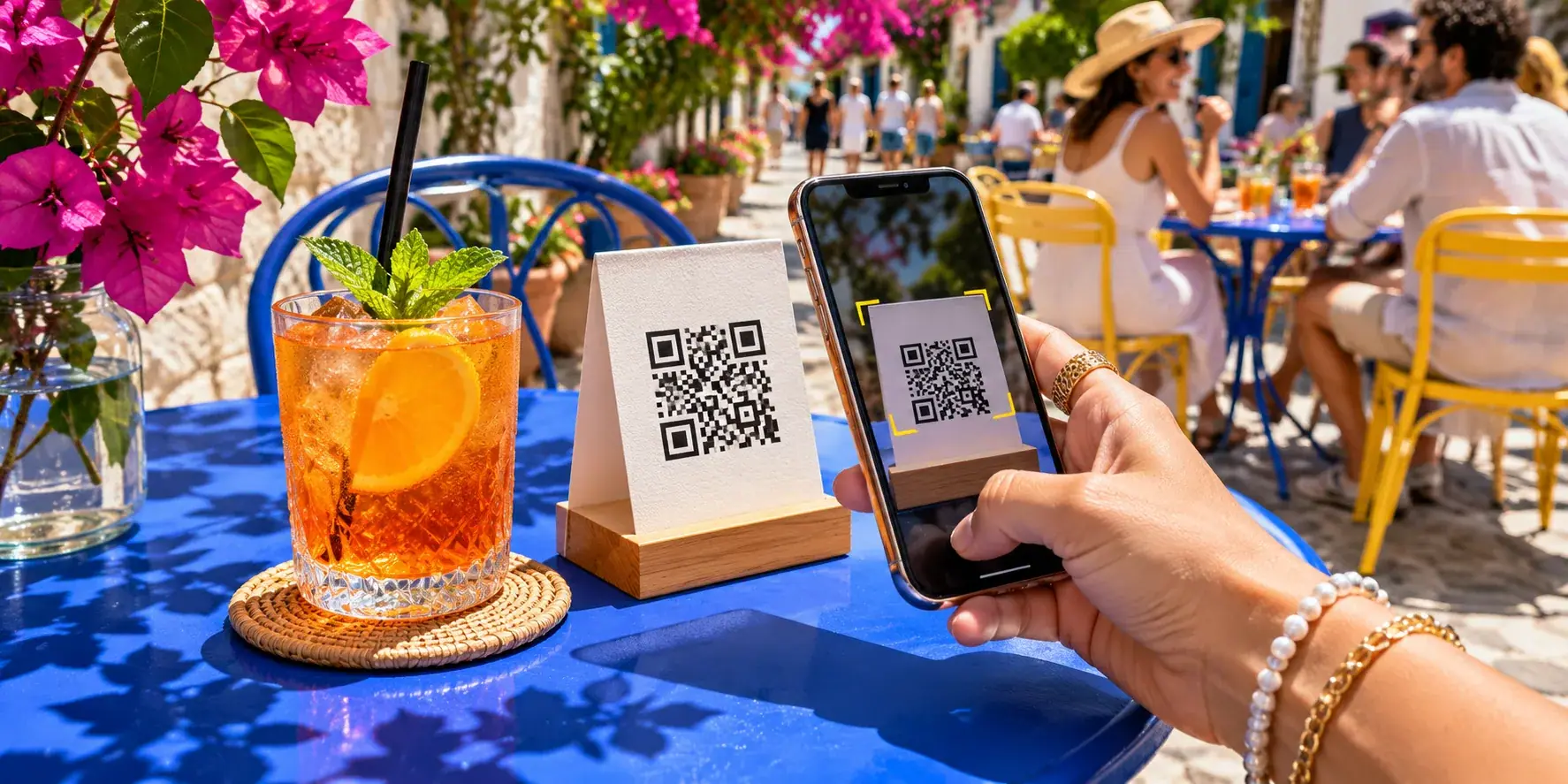
Commission is the visible cost. The less visible question is who owns the channel the order came through. When a guest orders from a QR code on your own table, through a menu you control, three things stay with you.
The customer relationship
The guest sees your menu, your dishes and your name. Nobody else's brand sits between you and them, and the experience they remember is the one you designed.
Control of the menu
You should be able to change a price, pull a dish or mark something sold out yourself, mid-service, without raising a ticket or waiting for anyone. A menu you cannot change quickly is a menu that is wrong for part of every night.
Your data
Every order tells you something: what sells, when, at which tables, with which add-ons. That history is one of the more valuable things your restaurant produces. Make sure it is yours, that you can export it, and that you can take it with you if you ever leave. Get that in writing, not just on a sales call.
What to check in any restaurant ordering system
Whether you are choosing a simple QR code ordering tool or full restaurant management software, these questions apply. Ask them of every vendor, including us. For how the ordering flow itself should work, from the guest's scan to the kitchen screen, see our guide to choosing a QR code ordering system.
| Question | Why it matters |
|---|---|
| Is there a commission or per-order fee on any plan? | A plan can be flat at one tier and add per-order fees at another. Check every tier you might move to. |
| What is not in the monthly price? | Setup fees, per-staff charges, hardware and add-ons are where flat pricing stops being flat. |
| Who handles card payments, and what does that cost? | Zero commission on orders does not remove payment processing fees. They are a separate line. |
| Can I change the menu myself, and how fast do guests see it? | Price changes and sold-out dishes need to reach every table within moments, not overnight. |
| What happens if the internet drops? | Service does not stop because the router did. Ask what keeps working and on which devices. |
| Does it run on devices I already own? | New hardware is a cost, a lead time and one more thing to break. |
| Can I export my orders and menu if I leave? | If the answer is vague, assume the answer is no. |
| What does it not do? | Stock, rotas, payroll, printing, delivery apps, paying at the table. Know the gaps before you build service around it. |
| How long does setup take? | A system that takes weeks to set up is a system you will keep putting off. |
The last two questions are the ones vendors least like answering, which is exactly why they are worth asking.
Where Zervoo fits
Zervoo is our product. Upwwards designs, builds and runs it, so read this section knowing that. Here is what it is, what it costs, and what it does not do yet.
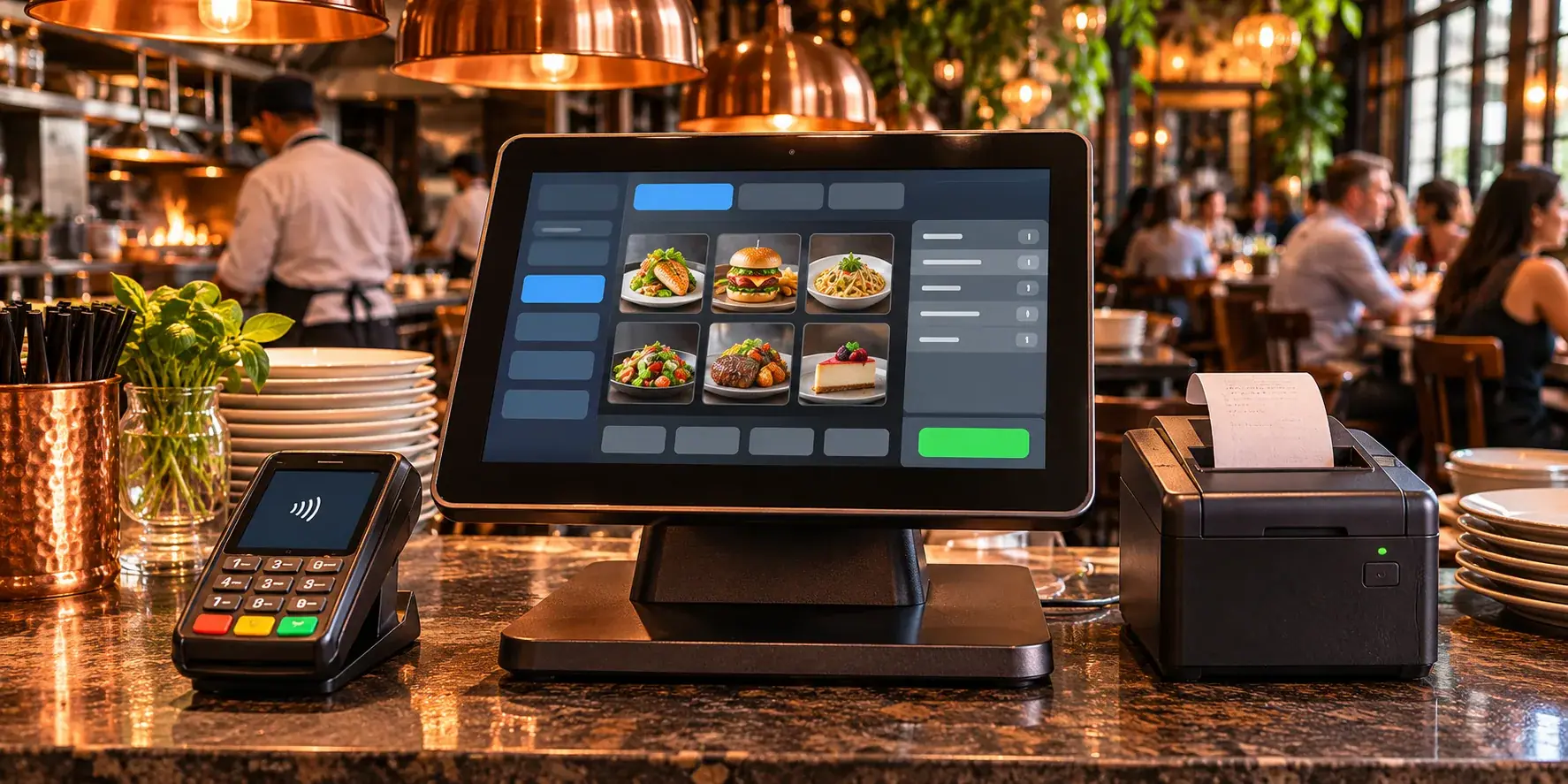
What it is. Restaurant management software for the whole floor: a QR guest menu with ordering, a kitchen screen, a counter POS and a live dashboard, on one login.
How it is priced. Per venue, per month, with no commission on orders on any plan. There is no setup fee, no hardware to buy and no charge per staff login. It is billed monthly and you can cancel any time. The Menu plan, a guest menu to browse without ordering, starts from $10 per venue per month (a starting price, excluding GST or VAT). The full plans, with ordering, the kitchen screen and the dashboard, are priced on a short call and sent in writing.
Ownership. If you leave, you take your orders and menu with you. The data is yours.
Menu control. Change a price and every table sees it within seconds. Mark a dish sold out once and every table's menu shows it straight away.
Devices and setup. It runs in the browser on the phones, tablets and laptops you already have; a basic tablet is enough for a kitchen screen. A single venue is usually set up on one call of about twenty minutes, with the menu typed up from a photo. A long menu can take an afternoon.
What it needs. An internet connection. If the Wi-Fi drops, phones and tablets on mobile data carry on, and so do guests on their own data.
What it does not do yet. Guests cannot pay from their phone yet. They pay the way they do today and you close the bill at the counter; paying from the table is on the way, through your own payment provider. There is no stock, rota or payroll. Delivery-app orders are not connected yet. It does not print tickets or bills today.
If any of those gaps is a dealbreaker for you, that is useful to know early. You can read more on the Zervoo page, and if you need something it does not cover, the same team builds custom hospitality software as well.
Do the sum before the sales call
You do not need anyone's opinion to settle this. Take last month's order count and your average order value, multiply them by the commission rate you are paying or being offered, and set the result next to a flat monthly fee. Then divide that commission by your real margin and look at what share of your profit it represents.
Once you have those two numbers, take the checklist above to every vendor you are considering. If you would like a second pair of eyes on the numbers, or you are weighing up something custom for your venue, book a free discovery call and we will talk it through.