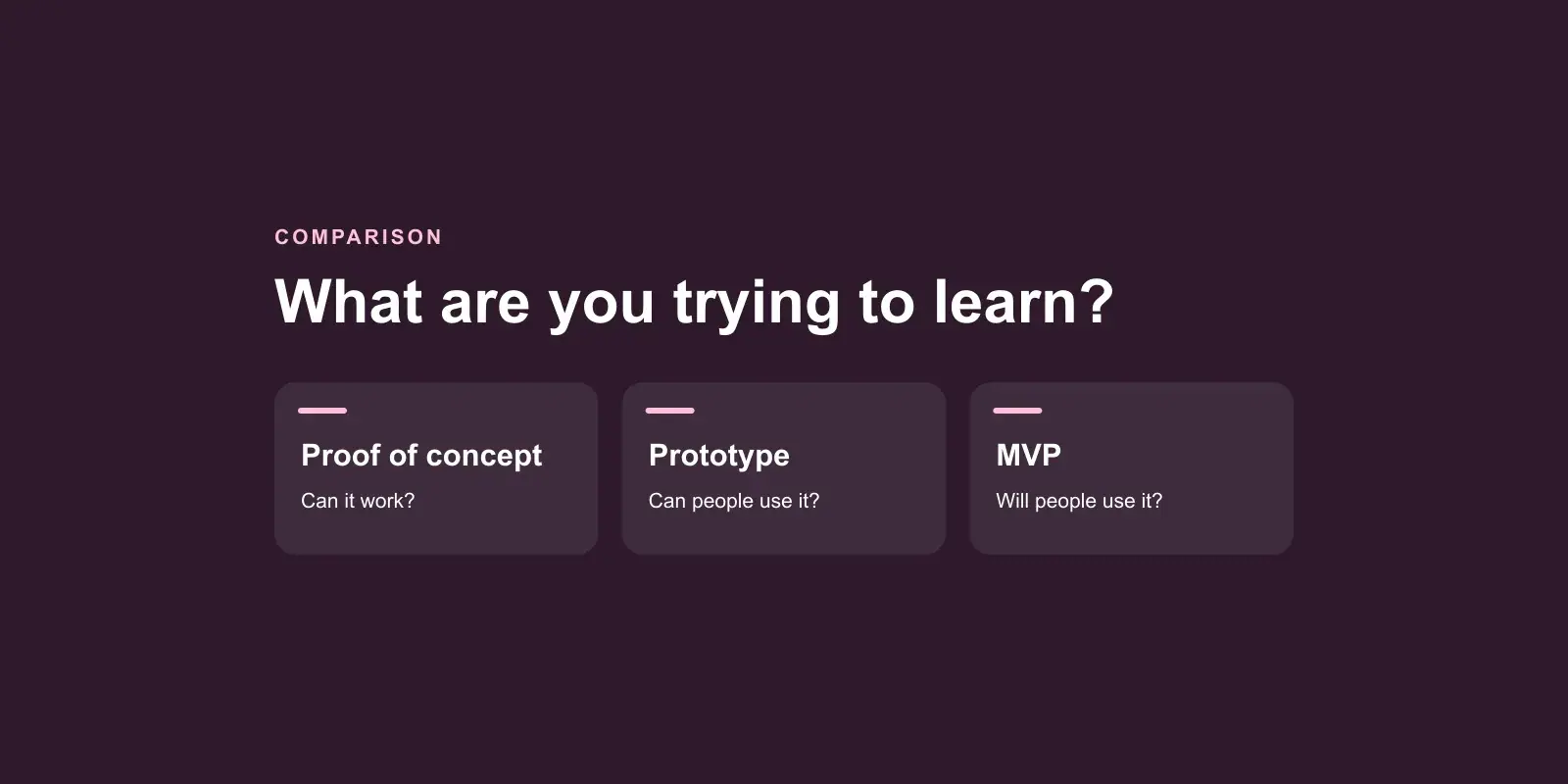
How long does it take to build an MVP? It depends on four things more than anything else: how much you put in scope, how many platforms you launch on, how many outside systems you connect to, and how quickly decisions get made on your side. That is why one founder hears "a few weeks" and another hears "several months" for what sounds like the same idea. This guide explains what takes the time, sets out a phase-by-phase MVP timeline, and covers how to shorten it without cutting the part users actually need.
The short version: an MVP timeline is a scope decision in disguise. Teams rarely build slowly. They build what was agreed, and what was agreed is usually larger than the riskiest assumption needs.
Why the answer to "how long does it take to build an MVP" varies so much
Published answers range widely because they are answering different questions. Some count only development. Some include discovery, design and testing. Some assume a single web app; others assume iOS, Android and an admin panel. Some are describing a clickable prototype that is called an MVP.
When you ask how long does it take to build an MVP, you are really asking four smaller questions:
- How much is in scope? Every user role, screen and rule adds design, build and testing time.
- How many platforms? Web only, mobile only, or both. Each platform adds testing and release work.
- What does it connect to? Payments, CRM, accounting, maps, a partner's API. Each one brings its own delays.
- How fast are decisions? A founder who answers questions the same day keeps a team moving. A week of waiting per decision adds up quickly.
Change any of these and the MVP development time changes with it. That is also why the most useful answer to "how long does it take to build an MVP?" is a list of assumptions, not a date.
What takes the time in an MVP build
If you break the question "how long does it take to build an MVP?" into its parts, five kinds of work account for almost all of the calendar.
Scope and discovery
Discovery turns an idea into a written list of features, user flows and acceptance criteria. It feels slow because nothing visible gets built, but it is the phase that makes every later estimate honest. Skipping it does not save time; it moves the time into rework.
Design
Wireframes, a clickable prototype of the core flow and visual design. Testing the prototype with a handful of real users before building is one of the cheapest ways to avoid building the wrong thing. The time grows with the number of screens and states (empty, loading, error, success) each one needs.
Integrations
Integrations are where timelines most often go wrong. A payment provider may need business verification before you can take live payments. A partner's API may have thin documentation, no sandbox or rate limits nobody mentioned. Each one is outside your team's control, so it deserves early attention.
Testing and hardening
Automated tests on the rules that matter, manual testing across devices and browsers, security checks on login and permissions, backups and monitoring. This is the work that makes the MVP viable rather than just minimal.
App store review
For a mobile MVP, Apple and Google review every submission, and a rejection means fixing and resubmitting. First submissions are the most likely to raise questions about privacy disclosures, sign-in options or minimum functionality. Leave room for at least one round trip.
A phase-by-phase MVP timeline
Here is how a typical MVP build is sequenced. We have left out durations on purpose: they depend on your scope, and any number without your scope behind it would be a guess.
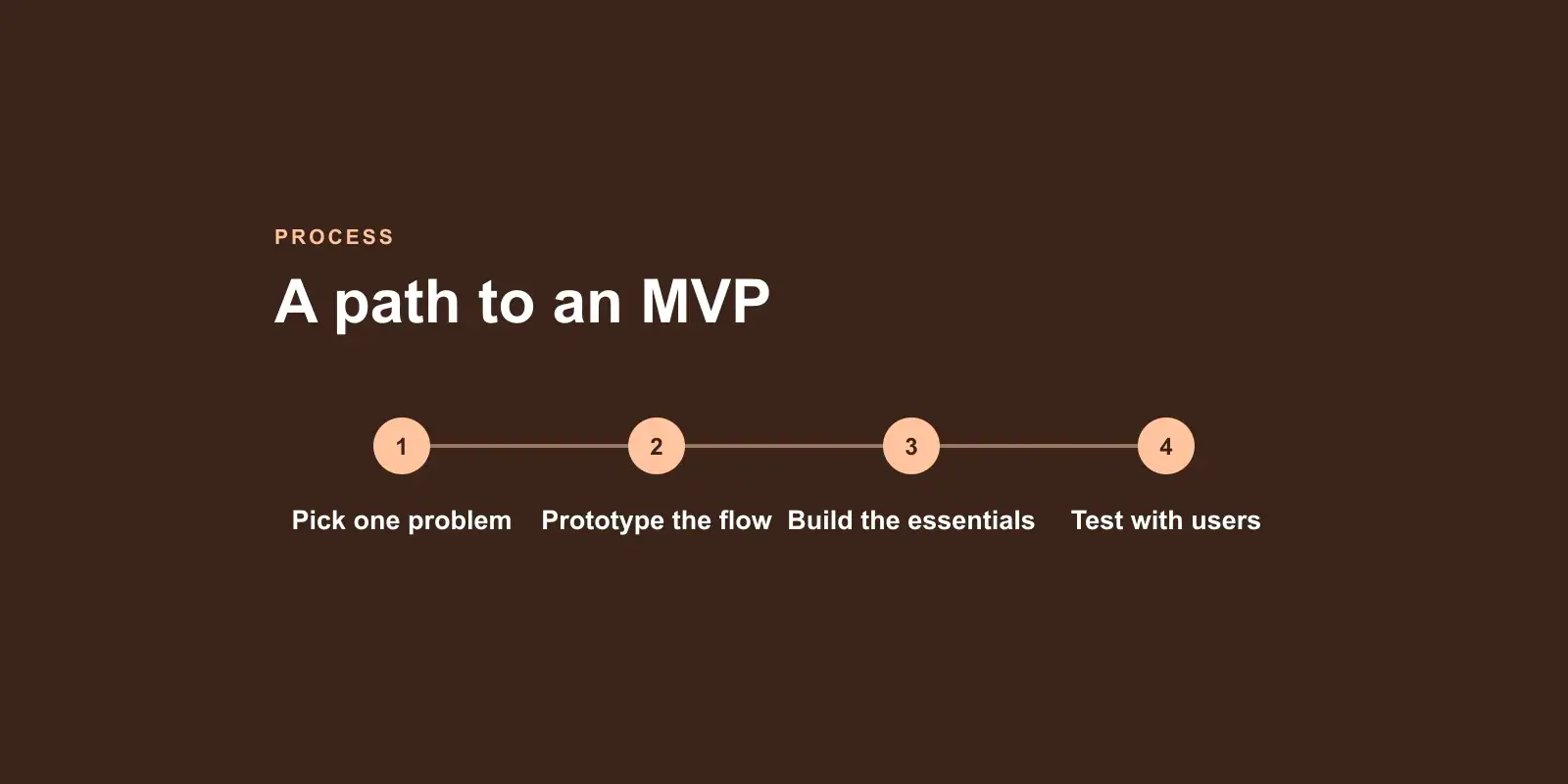
| Phase | What happens | What you contribute | What can stretch it |
|---|---|---|---|
| Discovery | Problem, users, riskiest assumption, must-have features, out-of-scope list | Answers, access to users, priorities | Unclear goals, too many stakeholders |
| Design | Wireframes, prototype, visual design of the core flow | Feedback on prototypes | Rounds of changes after sign-off |
| Build sprints | Frontend, backend, integrations, admin screens, in short sprints with a demo at the end of each | Review each demo, decide on trade-offs | New features added mid-build, slow third parties |
| Testing and hardening | Test suite, device testing, security review, monitoring, backups | Acceptance testing with real scenarios | Bugs in integrations, late design changes |
| Launch | Production deployment, app store submission, a small first group of users | Store accounts, legal pages, support plan | Store rejection, missing business verification |
| Learn and iterate | Measure, talk to users, plan the next sprint | Talking to users | Treating launch as the finish line |
At Upwwards, the build runs in two-week sprints, each ending in a working demo, so you see the MVP grow and can change priorities before they become expensive. That rhythm is the core of our SaaS and product engineering work.
For how the same phases play out in a full app project, see how long app development takes.
What makes an MVP build slip
Most slips come from the same handful of causes. None of them are about engineers typing slowly, and all of them change the answer to "how long does it take to build an MVP?" far more than the choice of framework.
- Scope creep. "While you are in there, could it also..." is the most common reason an MVP timeline grows. Each addition looks small; together they are a second project.
- Slow decisions. A question waiting on the founder for a week holds up every task that depends on it.
- Integration surprises. Missing sandboxes, undocumented behaviour, verification steps that take time to clear.
- Late design changes. Changing a flow after it has been built means rebuilding it and retesting everything around it.
- Two platforms at once. Launching on web, iOS and Android together multiplies testing and release work.
- Missing accounts and assets. App store developer accounts, domains, legal pages, brand assets and content that nobody owned until launch week.
- No definition of done. Without written acceptance criteria, "nearly finished" can last a long time.
Each of these is visible early if someone is looking. A team that tracks them can answer "how long does it take to build an MVP from here?" honestly, mid-build. A weekly review of open questions and blocked tasks catches most of them before they cost a sprint.
How to shorten the MVP timeline without cutting the core
The way to answer "how long does it take to build an MVP" with a shorter number is to make the MVP smaller, not to make the work sloppier.
- Test one assumption. Name the single belief that would sink the business if it were wrong, and build only what tests it.
- Launch on one platform. A responsive web app is often the quickest route to real users. Add mobile once you know people come back.
- Buy the commodity parts. Authentication, payments, email and analytics from proven providers rather than built from scratch.
- Start integrations early. Open accounts, request sandbox access and begin verification in the first week, so waiting happens in parallel with building.
- Run operations by hand at first. An admin screen and a person can replace a lot of automation in the first months.
- Decide quickly. Name one person who can say yes or no on scope, and commit to answering within a day.
- Freeze scope per sprint. New ideas go on a list for the next sprint, not into the current one.
What not to cut: tests on money and data paths, permission checks, backups and monitoring. Those are what let you put real users on the product without a nervous launch. If budget is the other side of the question, our breakdown of MVP development cost shows how the same scope decisions move the price.
Getting an MVP build time estimate you can plan around
So, how long does it take to build an MVP for your idea? You will get a reliable answer once the must-have list, platforms and integrations are written down, and not before. Write a one-page brief, mark what is out of scope, and ask any supplier which phases their timeline covers and what it assumes about your availability.
If you would like a realistic MVP timeline for your product, book a free 30-minute discovery call. A senior engineer talks it through with you, and a written approach, timeline and estimate follow within two business days.